


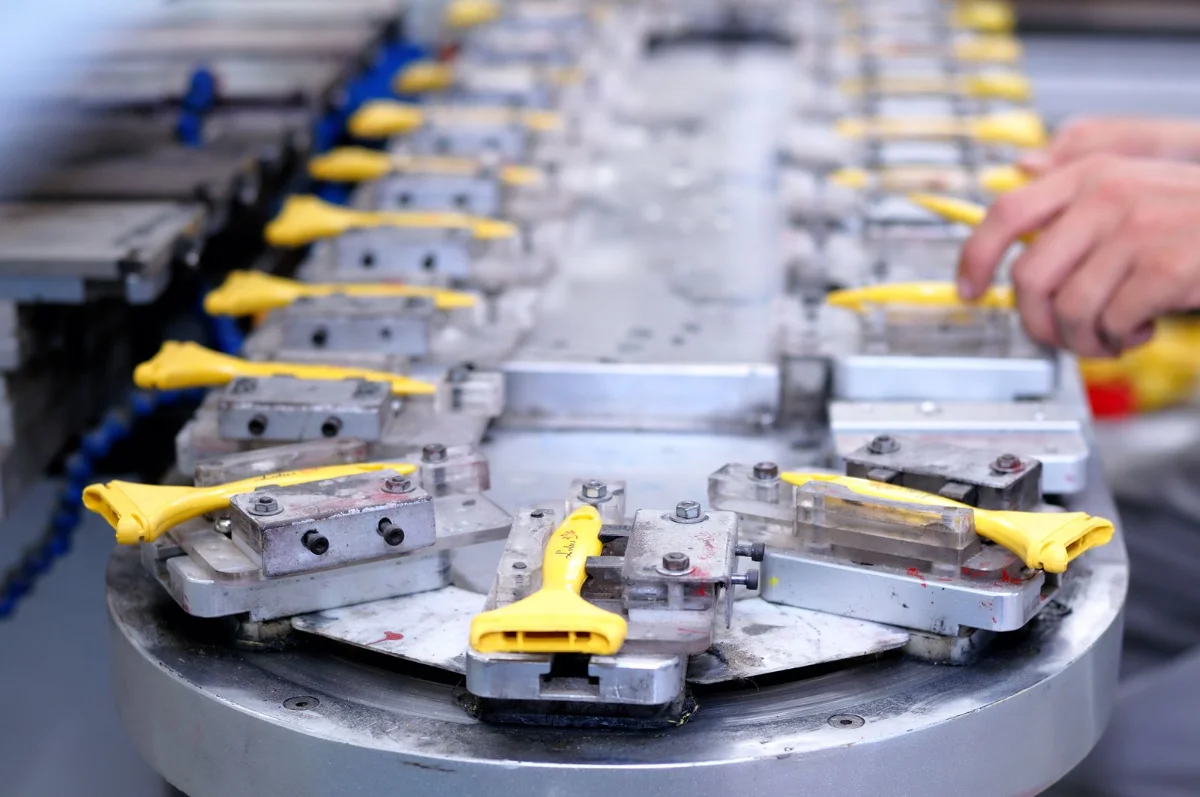
Manufacturing productivity improves when people, equipment, materials, and data work in the same direction. Lean manufacturing process improvement can help manufacturers streamline operations, reduce defects, shorten lead time, and free up production capacity.
At OptiTest, we help manufacturers evaluate the technical ability behind strong production performance. Our simulator-based assessments give employers clearer evidence before making hiring, promotion, or workforce development decisions.
How to Increase Productivity in Manufacturing
Start With Accurate Performance Data
Productivity in manufacturing should begin with accurate shop floor data. Before changing staffing, equipment, or production schedules, manufacturers need a clear view of where time, labour, material, and machine capacity are being lost.
The right key performance indicators show how the production process actually performs. Metrics such as output per labor hour, overall equipment effectiveness, scrap, rework, machine efficiency, and production delays can help employers see where process improvements are needed and where training would have the greatest impact.
Map the Production Process Before Changing It
Many productivity problems sit inside the way work moves from one step to the next. A plant may have capable people and reliable equipment, but still lose time when production flow is unclear or materials do not reach the right place at the right time.
Value stream mapping gives teams a clearer view of the full production process. It shows where delays start, where movement slows the work, and which bottlenecks create the most pressure. With that visibility, manufacturers can make changes that improve material flow and support stronger production capacity.
Standardize Work Where Consistency Matters Most
Standard operating procedures create a common baseline for safe, repeatable work. They are especially useful when small differences in setup, machine settings, inspection routines, or maintenance checks can affect output.
A good procedure should be easy to follow during training and specific enough to reduce confusion during the shift. When teams work from a clear standard, supervisors can spot skill gaps sooner, reduce avoidable mistakes, and support employees with more focused development plans.
Improve Hiring for Technical Roles
Manufacturing hiring has a direct effect on productivity. A candidate may interview well, while technical roles still require practical problem solving under time pressure. This is especially true in production, maintenance, skilled trades, mechanical, and electrical work.
Simulator-based assessment gives employers clearer evidence of how a person thinks through real job-related problems. It can show how a candidate approaches mechanical faults, electrical troubleshooting, PLC-related tasks, or industrial control panel situations before a hiring decision is made. Better hiring decisions can reduce early turnover, training delays, safety risk, and lost production time. They also support stronger role fit and more confident workforce planning.
Build Training Around Real Skill Gaps
Employee training should be connected to the work people actually perform. Productivity gains are stronger when training focuses on the specific skills needed on the line, in maintenance, or in technical support roles.
Assessment results can help employers separate knowledge gaps from performance gaps. A maintenance employee may know the terminology but struggle with troubleshooting sequence. A machine operator may handle routine work well and need more support when abnormal conditions appear. When employers know where skill gaps sit, workforce training becomes more practical. This supports labor productivity, safer operations, fewer repeated errors, and more reliable technical performance.
Use Maintenance Planning to Protect Output
Equipment problems can quickly reduce productivity. A small issue with alignment, lubrication, calibration, sensors, electrical components, or controls can lead to interruptions, slower cycle times, quality defects, or unplanned shutdowns.
Preventive maintenance and planned maintenance should be tied to equipment condition, production schedules, and the risk each asset creates for the operation. Teams should also review performance data to see which machines create the most lost time, scrap, or quality concerns. Better maintenance planning can improve machine efficiency and reduce production delays. It also protects production capacity by giving maintenance employees enough time to address equipment issues before failures affect customer orders, product quality, or schedule commitments.
Improve Material Flow and Inventory Control
Productive manufacturing depends on materials being available when production needs them. Even strong teams and reliable machines can lose time when materials arrive late, sit in the wrong area, or build up beyond what the process can use.
Inventory control should support the full production process, from receiving through finished goods. Manufacturers can review where materials wait, how often teams search for parts, and where supply chain disruptions affect production schedules. Better material flow helps reduce scrap, lower storage costs, improve resource utilization, and keep output closer to customer demand.
Apply Lean Manufacturing Principles Carefully
Lean manufacturing principles work best when they are tied to a clear production issue. A plant may need to improve changeovers, reduce extra movement, or address a bottleneck that slows the next step in the process.
The most useful improvements are usually specific and manageable. Teams can adjust one process, measure the result, and decide whether the change should become part of standard work. Over time, steady lean improvements can increase output, reduce waste, improve product quality, and make better use of existing labour and equipment.
Review New Technology Through a Productivity Lens
New technology should solve a clear production problem. Automation, production monitoring tools, sensors, and digital work instructions can support productivity when the plant already understands where the process is slowing down.
Before investing, manufacturers should consider how the tool will fit into daily work and how employees will use the information it provides. When technology improves visibility, speeds up decisions, or reduces repeated errors, adoption becomes easier. It can also support better performance data, faster response to equipment issues, and more consistent production.
Keep Continuous Improvement Practical
Continuous improvement works best when teams can see progress. Large programs can lose momentum when the goal is too broad or disconnected from daily production work.
A practical approach starts with one problem that affects output, quality, safety, or schedule reliability. Measure the current state, test a change, review the result, and keep the improvement that works. With accurate data, practical assessment, clear procedures, and focused training, manufacturers are better positioned to improve efficiency and maintain quality as demand changes.
Improve Manufacturing Productivity With OptiTest
At OptiTest, we help manufacturers make better workforce decisions before productivity problems reach the production floor. Our simulator-based assessments measure practical technical ability, including mechanical aptitude, troubleshooting, electrical reasoning, PLC competency, and industrial control panel skills. Testing can be completed at your plant on your schedule or at our Toronto-Etobicoke office. For employers hiring or developing technical staff, our mechanical aptitude tests provide practical evidence for stronger hiring, training, and workforce planning decisions.

Leave A Comment